
Some debts are easy to spot.
A bug left in production. A skipped test suite. A corner-cut in a sprint. We call it tech debt and we know it comes with interest.
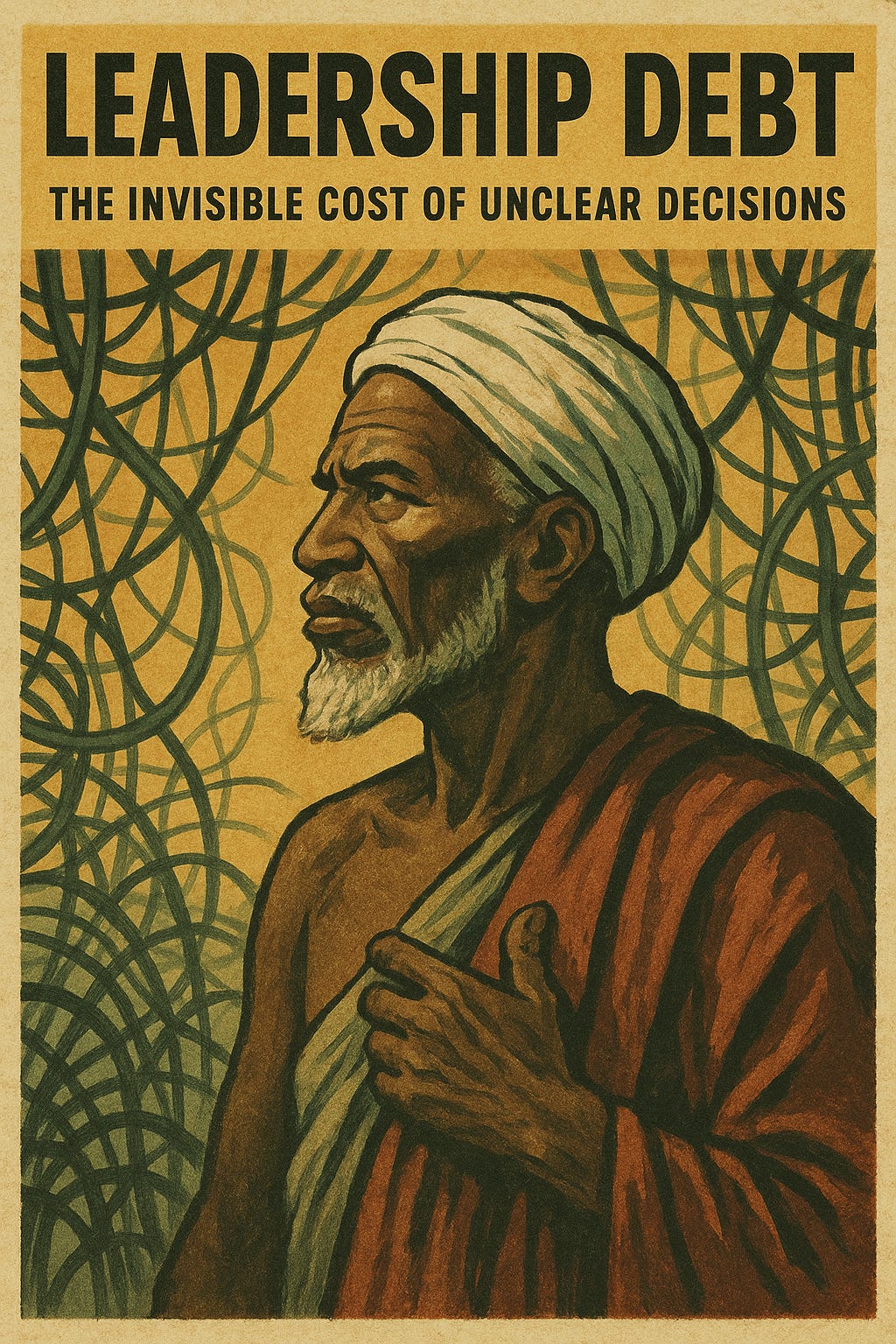
But there’s a quieter kind of debt that creeps in with far more damage:
Leadership debt.
Leadership debt doesn’t live in code. It lives in ambiguity.
In silence.
In unclear decisions.
And in all the things we meant to clarify, but didn’t.
It’s the debt we accumulate every time we fail to set expectations, dodge hard conversations, delay decisions, or default to "figure it out later."
And just like tech debt, leadership debt compounds. Fast.
What Is Leadership Debt, Exactly?
Leadership debt is the cumulative cost of unclear, inconsistent, or absent leadership behaviors especially when it comes to:
Decision-making
Role clarity
Ownership
Feedback
Prioritization
Vision
You don’t always notice it right away. But your team does.
It shows up in:
Projects that stall because “no one’s sure who owns it.”
Engineers building features that aren’t aligned with business priorities.
Quiet resentment after a meeting that ended with “Let’s circle back.”
Employees walking on eggshells because no one knows what’s expected.
Leadership debt isn't about being a bad leader.
It’s about what happens when we delay or avoid clarity—because we're overwhelmed, unsure, or stretched thin.
How It Feels on the Ground
You’ve probably heard some of these symptoms before:
“I’m not sure who’s actually driving this.”
“We talked about it three times, but nothing really changed.”
“I’m doing what I think I’m supposed to, but no one’s saying anything.”
“Do we even know why we’re doing this?”
These are the organizational equivalent of error logs.
Ignore them long enough, and you’ll have a system crash—not a sprint failure. Burnout, disillusionment, and good people leaving not because they’re weak, but because they’re working in fog.
Where Leadership Debt Builds Up
Let’s break it down with four specific categories:
1. Decision-Making Debt
This is the most common—and dangerous—form.
When leaders avoid decisions, delay alignment, or reverse calls with no explanation, confusion grows. Teams second-guess themselves. Confidence drops.
Example:
A team asks, “Should we invest in technical refactoring or ship a quick new feature for marketing?”
The answer is, “Let’s keep the conversation going.”
Weeks pass. Nothing’s decided. Engineers build reluctantly. Marketing pushes features that break. The trust gap widens.
Indecision is still a decision. And often, the most expensive one.
2. Role and Ownership Debt
No one knows who’s accountable. Everyone’s involved, but no one’s responsible. The infamous RACI black hole.
Example:
Product and Design both assume the other is leading a discovery phase. Engineering waits for clarity. The kickoff happens late—and with everyone misaligned.
When ownership isn’t clear, momentum dies. And frustration sets in fast.
3. Feedback and Communication Debt
The tough conversations you’re avoiding? The missed retros you keep postponing? That’s feedback debt. And it adds emotional interest.
Example:
A leader notices tension between two team members but doesn’t intervene. “They’ll figure it out,” they think. Two months later, one resigns and cites a hostile work environment.
Lack of feedback isn’t neutrality—it’s neglect.
4. Vision and Prioritization Debt
When a team doesn’t know the “why” behind the work, or what matters most, every decision feels political. Every delay feels like failure.
Example:
Leadership announces a big strategic shift—faster delivery. But teams still get rewarded for perfection and punished for bugs.
The message? Speed is talked about, but not supported.
You can’t prioritize without vision. And you can’t lead without prioritization.
How Leadership Debt Compounds
Unlike tech debt, leadership debt doesn’t just slow things down. It erodes trust.
And here’s the thing about trust:
Once it’s lost, you can’t “optimize” your way out of it.
People don’t give you the benefit of the doubt.
They start doing the minimum.
They protect themselves.
They stop raising their hand when something feels off.
You lose the creative tension that drives innovation—because everyone’s tired of feeling misaligned, unheard, or set up to fail.
A team that doesn’t trust the leadership system will eventually create their own unofficial one. And it’ll probably be slower, riskier, and full of workarounds.
Paying Down the Debt: 6 Ways to Get Clear, Fast
Just like tech debt, leadership debt isn’t shameful.
It’s inevitable.
But you do have to pay it down. And the best way to do that is by injecting clarity where confusion has crept in.
1. Make Decisions Visible
Start documenting decisions in the open. Use a simple format:
What was decided
Why it was decided
Who’s responsible
What happens next
This creates a shared memory for the team. It eliminates “he said, she said,” and makes reversals easier to track and explain.
2. Clarify Ownership Early and Often
Use tools like:
RACI models
DACI (Driver, Approver, Contributors, Informed)
Simple “Who’s owning this?” moments at every meeting
Better yet, add “ownership checks” to your project kickoffs.
Ownership isn’t micromanagement. It’s alignment.
3. Create Default Operating Rhythms
Decision-making doesn’t scale without ritual.
Weekly check-ins for cross-functional alignment
Biweekly retros with real action items
Monthly strategy reviews
These rituals aren’t red tape—they’re refueling stations.
They give your team permission to surface confusion before it calcifies into conflict.
4. Over-communicate in Times of Change
When priorities shift, be brutally clear.
What’s changing.
What’s staying the same.
What’s expected of each team or person.
Why now.
The absence of this creates space for rumors, resentment, and paralysis.
You cannot over-communicate clarity. You can only regret not doing it.
5. Make the Invisible Visible
Ask these diagnostic questions regularly:
What decisions are we avoiding?
Where do we feel friction?
What are we assuming, but haven’t said out loud?
Where do people feel most unclear?
Let your team audit the system.
Give them permission to call out the fog.
6. Own Your Gaps—Out Loud
Great leaders don’t pretend they have all the answers.
They show their process. They admit when clarity is missing—and invite others into creating it.
“I don’t know, but I’m working on it—and here’s what I’ll clarify by Friday.”
That’s not weak. That’s leadership.
The Real ROI of Paying Down Leadership Debt
When you reduce leadership debt, teams don’t just move faster—they move together.
You unlock:
Better decision velocity
Higher trust
Faster onboarding
Fewer political fights
Better feedback loops
Stronger morale
It’s not just about productivity. It’s about building a culture where people can actually focus on doing their best work not navigating a maze of guesswork and politics.
Don’t waste time
Every time you delay clarity, you borrow energy from the future.
You ask your team to work harder to understand what should have been obvious.
You ask them to read between the lines.
To interpret silence.
To fill in the blanks.
That’s not leadership. That’s passing the buck to the people you’re supposed to serve.
So next time something feels off not catastrophic, just foggy ask:
“Am I leading with clarity, or accumulating debt?”
Because it’s not the big mistakes that sink a team.
It’s the thousand vague moments no one remembers… until it’s too late.
About the Author
Tino Almeida is a tech leader, coach, and writer reshaping how we think about leadership in a burnout-driven world. With over 20 years at the intersection of engineering, DevOps, and team culture, he helps humans lead consciously—from the inside out. When he’s not challenging outdated norms, he’s plotting how to make work more human—one verb at a time.