

Let me start by saying this: If your leadership style boils down to the letters after your name on LinkedIn, then we need to have a serious talk.
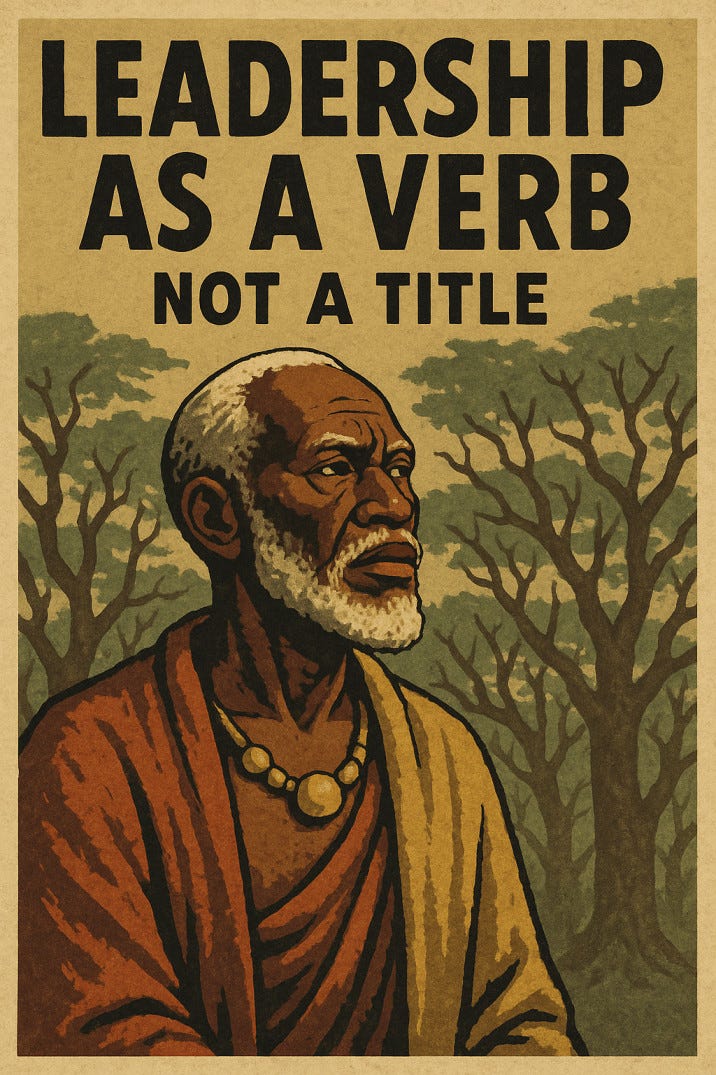
Because leadership, in my view, isn’t a label, a business card, or a corner office with a fancy chair that spins. Leadership is a verb.
It’s what you do, not what you are called. And believe me, this is something I learned the hard way.
When I first heard the word “leader,” I pictured someone standing on a pedestal, shouting orders like they’re starring in the corporate version of Gladiator.
You know the type, the one who commands respect by sheer volume or the size of their budget. The person whose title alone somehow makes them the “smartest in the room,” even if their ideas don’t always hold water.
I was young, hungry, and absolutely bought into that myth. Because that’s what everyone sells you in business schools, Hollywood movies, and those awful motivational quotes that litter your LinkedIn feed.
But reality? Reality is a messy, frustrating, wonderfully unpredictable beast that loves to rip that shiny myth apart.
Early in my career, I worked under a “leader” who had the title, the corner office, the corner parking spot—and none of the leadership skills. Meetings were a minefield. Decisions were made behind closed doors, then thrown over the fence like hot potatoes. People tiptoed around the room pretending everything was fine while quietly drowning in confusion and resentment. Spoiler alert: no one followed that leader because they wanted to, they just did because they had no choice.
That’s when it hit me: Leadership isn’t about titles.
It isn’t about hierarchy or ego. It’s about action. It’s about showing up in the messy, quiet moments when no one’s watching and still doing the right thing.
Leadership is the junior engineer who speaks up quietly to stop a catastrophic mistake during a code deployment. It’s the team member who remembers your coffee order and somehow senses when you need to vent without saying a word. It’s the person who calls out the “elephant in the room” when everyone else is pretending it’s invisible, even if it risks making things awkward.
In other words, leadership is doing, not declaring.
And I say this with a little bit of cheek, because leadership as a title is the easiest trap to fall into—and the hardest to escape.
You see it everywhere. People who crave the spotlight, the “leader” label, and all the perks that come with it but none of the responsibility or humility that real leadership demands.
Real leadership means listening when it’s way easier to just talk louder.
Real leadership means owning your mistakes instead of blaming the team.
Real leadership means making space for others to shine rather than hogging the glory.
Real leadership means doing the hard, uncomfortable things that nobody wants to do because you know it’s what the team needs.
I’m not here to romanticize it.
I’m not saying this type of leadership is the best one.
Leading like this is exhausting. It’s messy. You get ignored, misunderstood, and sometimes flat-out rejected.
But it’s also deeply rewarding in a way that no title or salary bump can match.
I remember the turning point in my own leadership journey. It wasn’t a promotion or a fancy project win. It was a moment when I stopped pretending I had all the answers and started asking better questions instead.
When I began investing my time in helping others grow, not just in pushing my own agenda. When I realized that my real job wasn’t to be the “hero” but the one who made heroes out of others.

That shift didn’t come from a management course or a TED talk. It came from watching how the best leaders around me behaved, not what their business cards said. It came from trial and error, from screwing up, from awkward conversations that felt like pulling teeth, and from moments of brutal honesty with myself.
And what surprised me the most? People noticed. They didn’t just follow because of a title—they followed because they trusted me.
Because I showed up when it counted. Because I made it safe for them to be themselves, to take risks, and yes, sometimes to fail.
Now, I’m not naive. I know the world still worships titles and credentials. I get it. In many companies, in many cultures, a title opens doors, commands attention, and carries weight. But that’s the external game. The real, internal game of leadership the one that builds teams, creates culture, and delivers results happens in those verb moments.
And here’s the kicker: Anyone can do it. You don’t need a “leader” badge to start leading. You just need to start doing. Speak up. Help someone.
Admit when you’re wrong.
Take responsibility. Push the team forward, even when it’s hard. Be the person who notices the stress in a teammate’s voice and asks, “Hey, you good?” instead of pretending it’s none of your business.
Leadership as a verb means you’re always in motion, always shaping and reshaping how you show up and what you offer. It’s not a destination—it’s a practice. It’s messy, imperfect, and sometimes feels like you’re swimming upstream. But it’s the kind of leadership that lasts. The kind that builds something real.
If you’re waiting for the perfect moment, the official promotion, or the corner office to “become” a leader, you’re going to be waiting a long time. Because leadership doesn’t wait. It moves. It acts. It influences. And sometimes it crawls through the trenches while the title-holder watches from the sidelines.
So here’s my invitation to you: Stop waiting for permission to lead.
Stop defining leadership by your job description or the size of your business card. Instead, focus on what you do every day, in every interaction, in every decision.
Lead like a verb. Lead like it’s a messy, exhausting, exhilarating dance. Lead like it’s about people, not power.
Lead like the real heroes you never heard about who quietly make everything work.
Because at the end of the day, anyone can wear the badge. But if you want to be a leader?
Move. Act. Verb it.
About the Author
Tino Almeida is a tech leader, coach, and writer reshaping how we think about leadership in a burnout-driven world. With over 20 years at the intersection of engineering, DevOps, and team culture, he helps humans lead consciously from the inside out. When he’s not challenging outdated norms, he’s plotting how to make work more human, one verb at a time.
I would say the essence of leadership is simple. Leader must offer people feasible perspective. Few do it today
And though, leadership is the smoother of the verbs…