

Trust is the ultimate bond every human seeks. It is the invisible thread that weaves societies together, the quiet understanding that allows us to lower our guards, to share our fears, and to believe in something greater than ourselves.
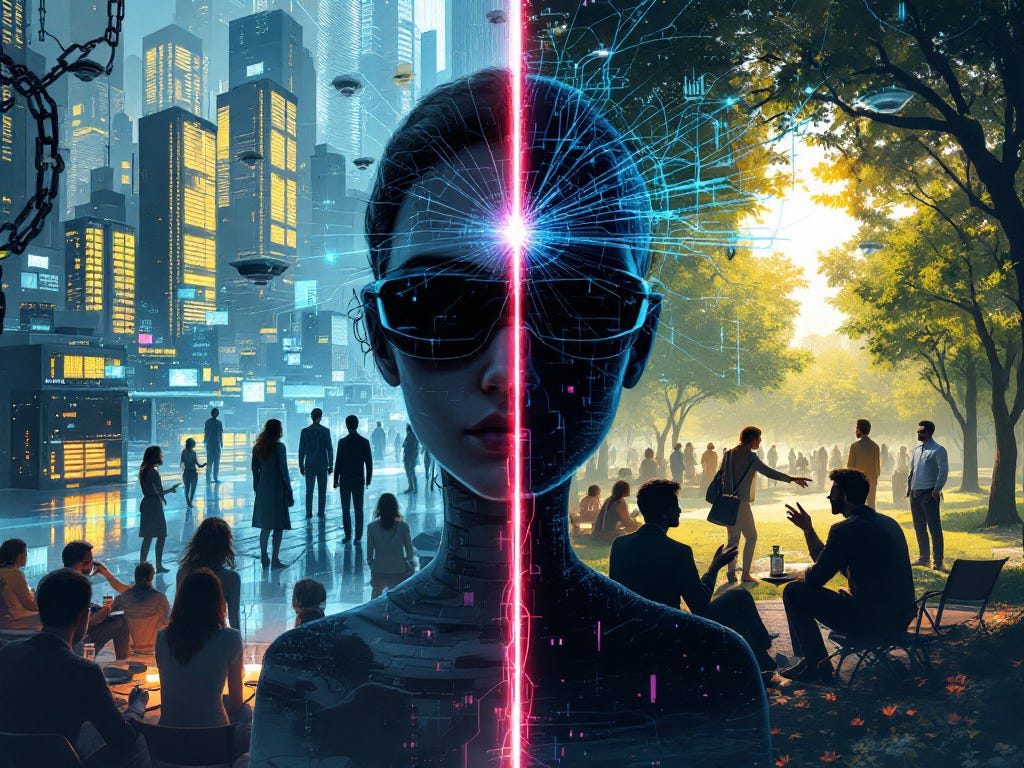
We socialise to build trust through conversations, shared experiences, and the slow, steady accumulation of mutual respect. The more we interact with someone, the stronger that bond grows. But trust is delicate. It takes years to build and mere seconds to shatter.
This unseen entanglement, this unspoken pact between people, is what makes human relationships so profound. It’s the confidence that our vulnerabilities will be met with kindness, that our secrets will remain safe, and that our intentions will be understood.
Trust is not just about honesty, it’s about safety the assurance that we can be our true selves without fear of judgment or exploitation.
Yet, in an era where technology seeps into every crevice of our lives, trust is under siege. When every interaction can be recorded, analysed, or even manipulated, the natural rhythm of building trust is disrupted.
We start questioning not just others, but ourselves. Will what I share be used against me? Will my vulnerabilities become data points in someone else’s algorithm?
The very tools designed to connect us often leave us feeling more isolated, more exposed, and less sure of who or what we can truly trust.
The Erosion of Trust in a Digital World
Consider the rise of enhanced technologies smart glasses that record our glances, algorithms that predict our desires, and social platforms that monetise our attention. These innovations promise convenience, efficiency, and connection. But at what cost?
When someone walks into a room wearing augmented reality glasses, we can’t help but wonder: Are they profiling me? Are they gathering information I never intended to share?
The knowledge that our words, expressions, and even our silences might be captured and analysed changes how we behave. We become guarded. We self-censor. We lose the spontaneity that makes human interaction so rich.
Worse still, these technologies often misrepresent us. Algorithms take fragments of our behaviour likes, clicks, fleeting comments and stitch them into a version of us that is simplified, exaggerated, or outright false. We might post something in frustration, only for it to be permanently etched into our digital identity. We might hesitate in a conversation, only for an AI to interpret it as weakness or deceit.
Trust cannot thrive in a world where we are constantly being dissected, judged, and sold to the highest bidder.
And yet, we are complicit. We adopt these technologies because they are convenient. We trade our privacy for personalisation, our autonomy for algorithms that tell us what to think, what to buy, and who to be. We tell ourselves that the benefits outweigh the risks that we are in control. But are we?
The Illusion of Control
One of the greatest deceptions of the digital age is the belief that we are in control. We assume that we can opt out, that we can delete our data, that we can still choose when and how to be vulnerable. But the reality is far murkier.
Every time we accept a terms-of-service agreement without reading it, every time we allow an app to access our location or our contacts, every time we engage with content designed to manipulate our emotions, we surrender a little more of our autonomy. We are not the users of technology; we are the product. Our attention, our data, and our trust are commodified, packaged, and sold.
This is not just a matter of privacy. It’s a matter of human dignity. When trust is reduced to a transaction when our relationships are mediated by algorithms that prioritise engagement over empathy we lose something essential. We lose the ability to truly see one another.
The Danger of a World Without Trust
A society without trust is a society in crisis. Without trust, collaboration becomes competition. Without trust, community becomes isolation. Without trust, leadership becomes coercion.
We are already seeing the consequences. Misinformation spreads faster than truth because trust in institutions has eroded. Polarisation deepens because we no longer believe in shared realities. Loneliness spikes because we mistake digital interaction for real connection.
And what happens when the next generation grows up in a world where trust is conditional where every relationship is mediated by an algorithm, where every kindness might be a calculated move? We risk raising a generation that doesn’t know how to trust at all.
Reclaiming Trust: A Path Forward
But this is not a story without hope. Trust is resilient. It can be rebuilt, even in a world that seems determined to undermine it. The key lies in intentionality in choosing, every day, to prioritise human connection over digital convenience.
1. Protect Your Attention
Our attention is our most valuable currency. Every minute spent scrolling, every notification we obey, every algorithm we let dictate our thoughts is a minute not spent building real relationships. We must reclaim our focus. Turn off notifications. Set boundaries. Choose depth over distraction.
2. Demand Transparency
We deserve to know how our data is being used. We deserve technologies that respect our privacy, not exploit it. Support companies that prioritise ethical design. Advocate for regulations that protect users, not just profits. And most importantly, ask questions. Don’t accept the status quo.
3. Cultivate Offline Trust
The strongest bonds are built in person through eye contact, shared laughter, and the unspoken understanding that comes from being fully present. Make time for real conversations. Put down the phone. Look someone in the eye. Let them see you not the curated version of you, but the real, imperfect, human you.
4. Teach the Next Generation
Children today are growing up in a world where trust is often transactional. We must teach them that real trust is earned, not algorithmically generated. Show them the value of face-to-face connection. Help them understand that their worth is not measured in likes or shares. Give them the tools to build relationships that last.
5. Lead with Empathy
If you are in a position of influence whether as a parent, a manager, a teacher, or a friend lead with empathy. Trust is built when people feel seen, heard, and valued. It’s built when we admit our mistakes, when we listen more than we speak, and when we choose kindness over convenience.
Trust as an Act of Resistance
This world seems to profits from our distrust, choosing to trust is an act of resistance.
It is a refusal to let algorithms define our relationships. It is a commitment to believing in the goodness of others, even when the world tells us to be suspicious.
Trust is not naive. It is courageous. It is the belief that, despite everything, human connection is worth fighting for. That we are more than data points.
That we are capable of change.
So yes, the digital age poses real threats to trust.
But it also offers us a choice.
Will we let technology dictate the terms of our relationships, or will we reclaim trust as the foundation of our humanity?
The future of trust is not determined by algorithms.
It is determined by us.
By how we show up, how we listen, and how we choose to connect. The question is not whether we can trust technology.
The question is whether we will trust each other enough to build a world where technology serves us not the other way around.
And that, perhaps, is the most revolutionary act of all.
About the Author
Tino Almeida is a tech leader, coach, and writer reshaping how we think about leadership in a burnout-driven world. With over 20 years at the intersection of engineering, DevOps, and team culture, he helps humans lead consciously from the inside out. When he’s not challenging outdated norms, he’s plotting how to make work more human—one verb at a time.
Diamantino's reflection on trust reads like a philosophical TED Talk delivered from the ruins of a data centre. The message is earnest: human connection is under siege, and algorithms are the new middlemen in our relationships. We’re told to reclaim our attention, demand transparency, and teach children that trust isn’t measured in likes, though one suspects they’ll be too busy curating their avatars to notice.
The irony, of course, is that this heartfelt plea arrives via a digital platform, nestled between targeted ads and algorithmic recommendations. Still, the call to resist by simply being present, eye contact, empathy, actual conversation, is refreshingly radical in a world where even silence might be recorded. Trust, it seems, is the new rebellion.
Trust is absolutely foundational to human thriving. It's been the key thread in the advancement of humans throughout history. Will AI change that - or enhance trust? Good article!